Concept, words and sketches by Lori Muñoz · Illustrated by Ivano Nardacchione · An original series by BrokersOfGood.
From the creator
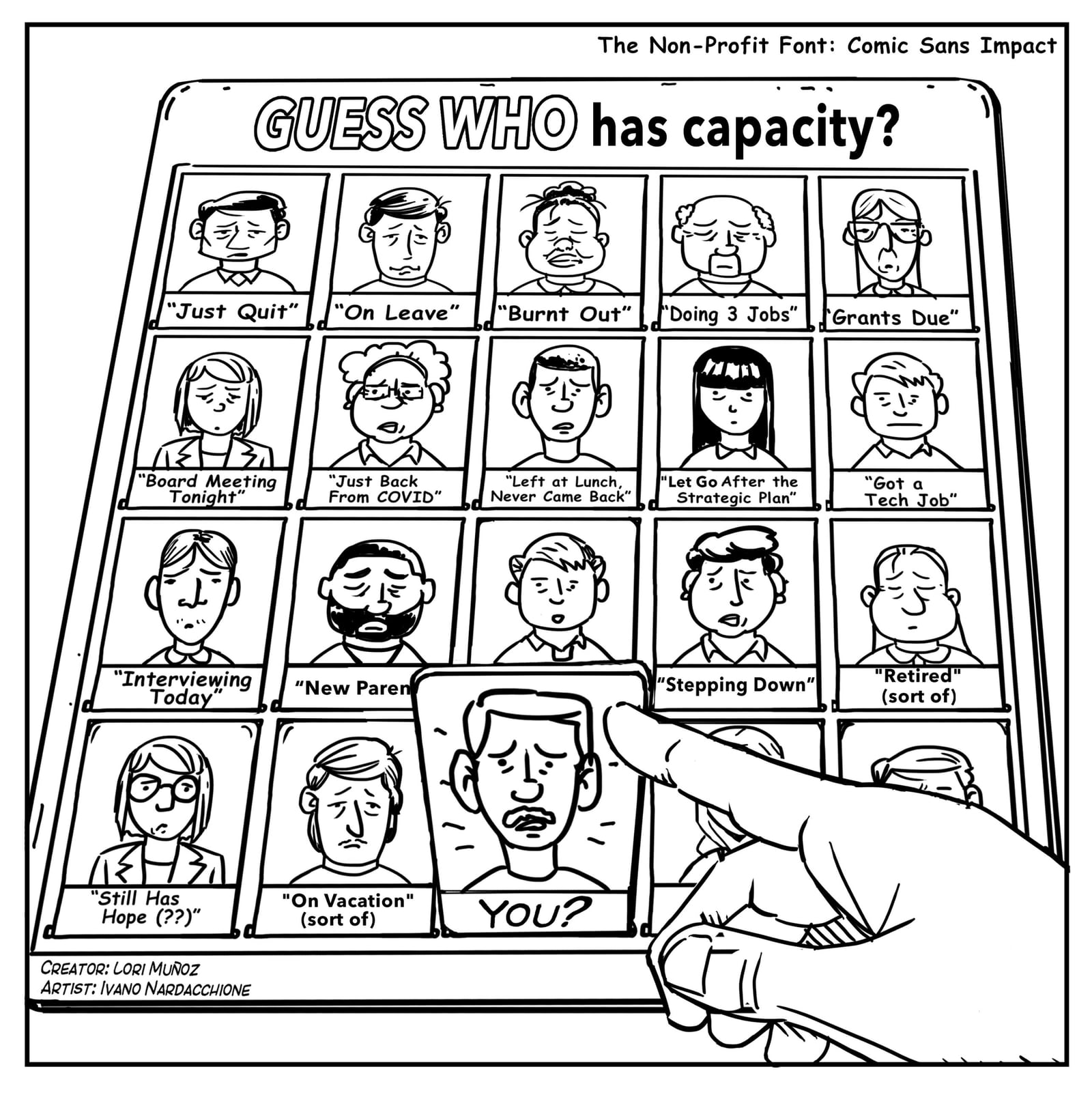
Capacity is not elastic. And “just one more thing” is never just one more thing.
Every year, as the holiday season approaches, nonprofits enter one of the most demanding stretches of the entire calendar.
Year-end campaigns. Holiday programming. Reporting. Stewardship. Budgeting. Community support. All layered on top of the everyday work that never really slows down.
And yet capacity is still treated like something that will simply stretch to meet the moment.
This is one of the most quietly persistent challenges in our sector: the chronic underestimation of what it actually takes to do nonprofit work well.
If you work with nonprofits — as a funder, partner or board member — ask yourself:
Do our expectations align with the size, staffing and actual capacity of the organization?
Are we assuming people can “just take on one more thing” because the mission matters?
How often do we assume someone can take on one more thing without taking anything else off their plate, recognizing their workload is already full, offering a clear timeline for how long the stretch will last, or making a plan for recovery afterward?
Are our deadlines and deliverables built around the calendar — or around human reality?
If you are a nonprofit leader or team member, ask yourself:
Where am I underestimating the real labour behind the plans I’m making — or agreeing to?
What have I said “yes” to recently that unintentionally reinforces the myth that we can “make it work” no matter what?
What would it take to communicate capacity limits clearly and compassionately to donors, boards and partners?
“We can’t meet these targets because, right now, we simply don’t have the capacity to do so with care for the humans doing the work.” What might change if we felt safe to say that out loud?
We chronically underestimate what it takes. We undervalue the people doing the work. We plan as if capacity is elastic — when in reality, it’s finite and fragile. And when we fail to plan for capacity, we plan for burnout.
Capacity isn’t just a staffing issue. It’s a systems issue. And it’s time we treated it like one.

From the creator
Capacity is not elastic. And “just one more thing” is never just one more thing.
Every year, as the holiday season approaches, nonprofits enter one of the most demanding stretches of the entire calendar.
Year-end campaigns. Holiday programming. Reporting. Stewardship. Budgeting. Community support. All layered on top of the everyday work that never really slows down.
And yet capacity is still treated like something that will simply stretch to meet the moment.
This is one of the most quietly persistent challenges in our sector: the chronic underestimation of what it actually takes to do nonprofit work well.
If you work with nonprofits — as a funder, partner or board member — ask yourself:
If you are a nonprofit leader or team member, ask yourself:
“We can’t meet these targets because, right now, we simply don’t have the capacity to do so with care for the humans doing the work.” What might change if we felt safe to say that out loud?
We chronically underestimate what it takes. We undervalue the people doing the work. We plan as if capacity is elastic — when in reality, it’s finite and fragile. And when we fail to plan for capacity, we plan for burnout.
Capacity isn’t just a staffing issue. It’s a systems issue. And it’s time we treated it like one.